Search
Jerusalem stone olive wood and silver by Judaica Webstore

Materials with Meaning: Jerusalem Stone, Olive wood and Silver

How Judaica Connects Us to the Land of Israel

The materials chosen for Judaica design can connect you directly to Israel’s landscape and spirit. From the enduring strength of Jerusalem stone to the natural warmth and beauty of olive wood, and the quiet brilliance of pure silver, each element shapes the art and meaning within these objects. To collect Judaica is to connect, not only with ritual, but with the land of Israel and its history.

Jerusalem Stone: Shaping the Sacred City

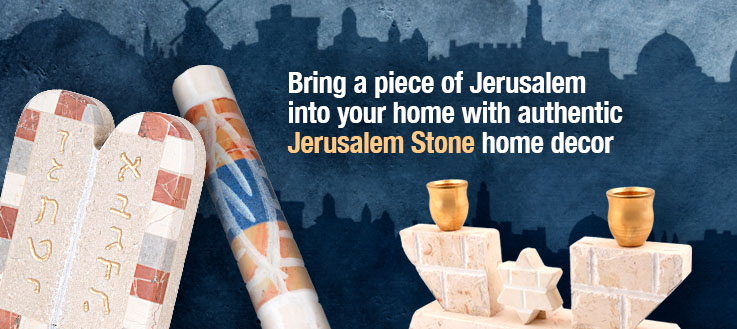
Jerusalem stone is the foundation of ancient architecture in the holy city. Its limestone origin ties every mezuzah or Hanukkah menorah directly to Jerusalem’s landscape. Authenticity matters. True Jerusalem stone comes from quarries surrounding the city, including historic quarries such as Zedekiah’s Cave, whose stone provided the building blocks for the Temple Mount and the Western Wall. Skilled artisans, like Lion of Judah Studio work with this stone for its durability and beauty, but above all for what it represents: a lasting reminder of Jerusalem’s holiness, then and now.


Jerusalem stone at the Western Wall


History Corner

Zedekiah’s Cave, also known as Solomon’s Quarries, is a vast underground limestone quarry beneath the Old City of Jerusalem, extending from near the Damascus Gate northward under the city. Archaeological evidence shows that it was actively quarried during the Second Temple period, particularly under King Herod the Great, when large amounts of meleke limestone were needed for his monumental rebuilding of the Temple and the city. Alongside this well-established history, tradition links the cave to the biblical account of King Zedekiah, who is said to have attempted to escape Jerusalem through an underground passage during the Babylonian siege, fleeing toward Jericho before being captured by Nebuchadnezzar’s forces. Whether history or legend, the story adds a dramatic human layer to the site, where solid archaeological evidence and ancient memory meet beneath the streets of Jerusalem.


White limestone or meleke
Contemporary artists are drawn to working with white limestone, creating Judaica and sculptural objects that echo Jerusalem’s ancient stonecraft. Known historically as meleke, this fine-grained limestone was prized in antiquity for being soft and workable when freshly quarried, yet durable once exposed to air. Its smooth texture and light color made it ideal for ritual objects, decorative elements, and finely finished stonework during the Second Temple period, linking modern artistic practice directly to the material traditions of the past.

Red limestone and mizzi ahmar
Red limestone found in and around Jerusalem encompasses a range of stones that vary from soft pink to deep reddish hues, the result of differing iron content within the rock. Among these, mizzi ahmar emerges as a distinct and recognizable variety, known for its density and strength. In antiquity, those properties made it the stone of choice for foundations and load-bearing elements. Today, artists and designers are drawn to mizzi ahmar not only for its durability, but also for its warm, earthy color and tactile surface, which lend depth and presence to sculptural and design pieces.

btn
Jerusalem-Stone-home-decor-cat-m
Olive Wood: Living Ties to the Land

Olive wood is known for its beautiful grain and rich color. Shaped by decades of Mediterranean sun and soil, its natural patterns bring warmth and life to Judaica. In ritual objects such as mezuzahs and Shabbat candlesticks, olive wood has long symbolized peace and continuity.


Olive trees in Israel Judaica webstore


Beyond its symbolic meaning, olive wood is also valued for its durability and density. Because olive trees grow slowly, their wood develops a tight grain that responds especially well to fine craftsmanship. Artisans work with the natural curves and variations of the material rather than forcing uniformity, ensuring that no two pieces are ever alike. In archaeology, olive wood has long been studied as well, and in Israel in particular, tree-ring analysis, allows scholars to match the unique growth patterns preserved in ancient olive wood to regional chronologies, helping date historic structures and artifacts while also shedding light on past climates and environmental conditions, including periods of drought.


Olive wood by Judaica Webstore


To preserve its beauty, keep olive wood away from direct sunlight and lightly oil it from time to time, allowing the material to age naturally and retain its character. Over time, subtle changes in tone and texture may occur, adding depth and individuality and reflecting the long life of the tree from which the wood was shaped.

btn
Olive wood by Judaica Webstore
Did you know the oldest biblical text ever found was engraved on silver?

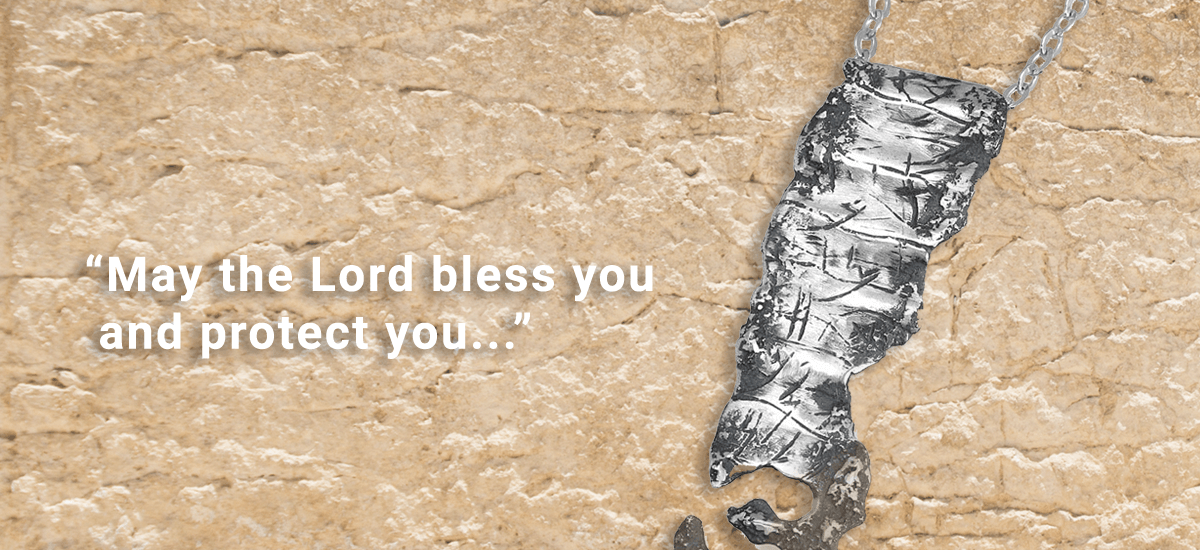
ketef Hinnom priestly Blessing on silver amulet


Silver has always held a special place in Judaica, valued both for its beauty and for its durability across centuries. One of the most extraordinary examples of this enduring quality was uncovered in 1979, when Israeli archaeologist Dr. Gabriel Barkay excavated a burial site at Ketef Hinnom, just outside Jerusalem’s Old City. There, among ancient tombs dating to the late First Temple period, he discovered two small rolled silver amulets. When carefully unrolled and studied, they revealed the Priestly Blessing from the Book of Numbers, making them the oldest known biblical texts ever found, dating to around 600 BCE, long before the Dead Sea scrolls we written. Inspired by this remarkable discovery, a silver amulet adaptation based on the Ketef Hinnom find is part of our Israel Museum collection.

This deep historical connection continues today in the work of Israeli silversmiths like Hazorfim, Shoham Yemenite Art, or Bier Judaica, who carry forward age-old techniques such as hand hammering and intricate filigree. These methods, passed down through generations, honor silver’s unique ability to be both strong and finely detailed. Over time, silver develops a natural patina, a soft surface that reflects years of use and care. Rather than diminishing its beauty, this gentle aging becomes a quiet record of devotion and tradition. A silver Judaica piece does not simply age; it gathers memory.


Silver by Judaica Webstore


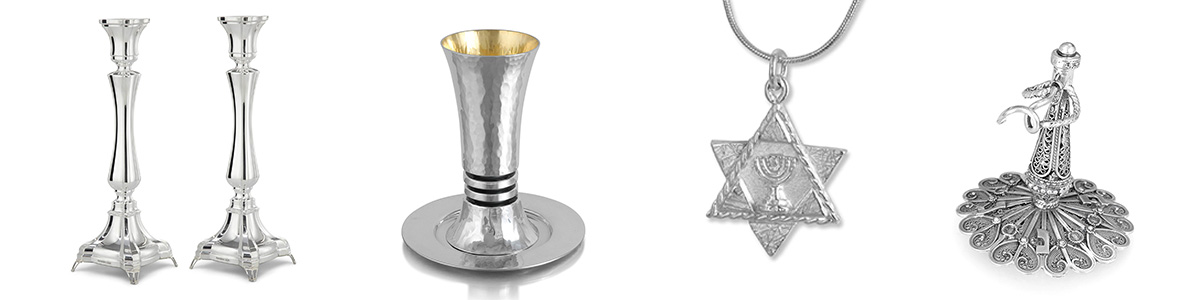
At Judaica Webstore, silver Judaica is sourced from Israeli artisans whose work reflects generations of tradition and craftsmanship. Alongside timeless ritual objects, their artistry also finds expression in silver jewelry like necklaces and rings, pieces that carry Jewish symbols and meaning close to the heart. Together, these creations are meant to bring beauty, meaning, and splendor to Shabbat and holiday tables and into everyday life, just as silver has done throughout Jewish history.


For more information about our research process, sourcing, and editorial review, please see our editorial standards and content policy.

btn
Sterling silver judaica

JWS POST YOU MAY LIKE

Jewish man with tefillin close up on his left hand
The Complete Guide to Tefillin
There is something deeply profound in tying the leather strap around oneself because the simple act of doing so connects one’s arm, heart, and mind to something infinite. The Tefillin is made up of two small black leather boxes, each containing Torah scrolls that have been written by hand. They
Jerusalem Temple Mount
Celebrating Jerusalem Day
Yom Yerushalayim (which translates to “Jerusalem Day”) is a national Israeli holiday celebrating the unification of Jerusalem, which occurred during the Six-Day War in 1967. The Israel Defense Forces had captured the parts of Jerusalem that were under Jordanian control since 1948, bringing the entire Holy City under Israeli sovereignty
cheese cake for Shavuot
7 Shavuot Recipes from Around the World
Shavuot 2026 is coming! The holiday starts at sundown on Thursday, May 21, and lasts through the following day in Israel and for two days in the diaspora. It is a widespread custom – and one of the defining features and many people’s favorite aspect of the holiday! – to
Happy Shavuot Conversations
Shavuot: Torah, Wit, and Plenty to Discuss Over Cheesecake
Shavuot celebrates the giving of the Torah at Mount Sinai, but the conversation around the Torah never really ended. Over the centuries, many have tried to explain what makes the Torah so unique. Some with deep reverence. Others with wit. A few managed both. Here’s a little inspiration for your
Olive trees in Israel
Why Israeli Olive Wood Is So Special
The olive tree is an important symbol in Jewish tradition, representing peace, faith, and resilience, and is additionally commonly associated with the Land of Israel. Mentioned throughout the Torah and Jewish texts, olive trees have been cultivated in the Land of Israel since ancient times, while their fruit is one
The Borders of the State of Israel
How the Negev and Eilat Became Part of the State of Israel
Did you ever wonder how Israel’s borders were really decided? Not just on maps or in meeting rooms, but out in the desert, where small moments helped shape big decisions. In the Negev, something as unexpected as a field of flowers helped convince visiting delegates that the land could be