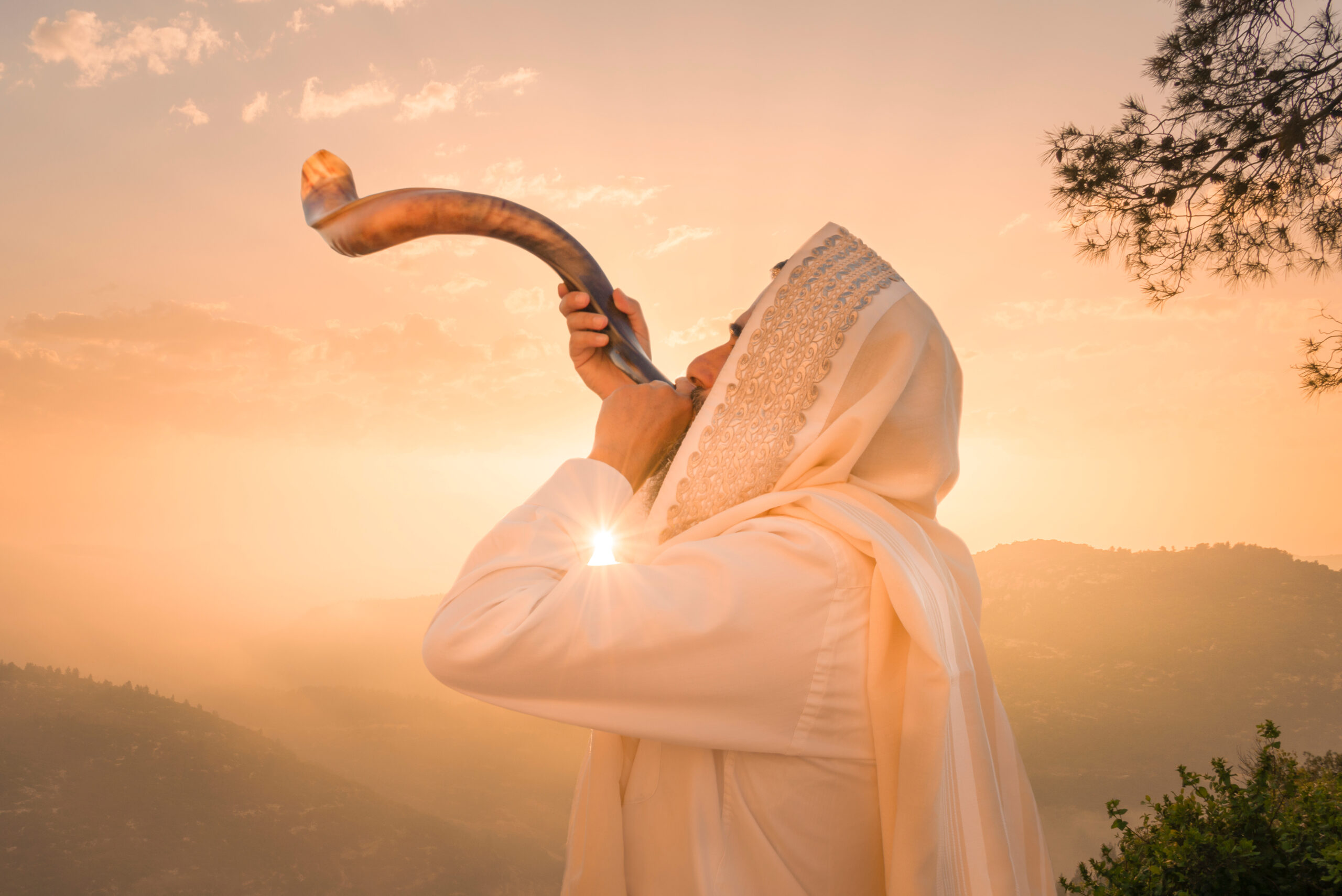
Rosh Hashanah, the Jewish New Year, is celebrated today with festive meals, synagogue prayers, and the sounding of the shofar. But what does the Bible actually say about this important holiday? Surprisingly, the Torah never uses the term Rosh Hashanah—instead, it speaks of a sacred day marked by shofar blasts and remembrance.

Where Rosh Hashanah First Appears in the Bible
The first mentions of the holiday appear in the Book of Leviticus (23:23–25) and Numbers (29:1–6). In both places, it is described as a day of rest, accompanied by the blowing of the shofar (the ram’s horn), and offerings in the Temple.
The Torah calls it Yom Teruah (the Day of Shofar Blowing) or Zichron Teruah (a Day of Remembrance with Shofar Blasts).
“In the seventh month, on the first day of the month, you shall observe a day of complete rest, a sacred occasion commemorated with loud blasts.”
(Leviticus 23:24)
Why the Seventh Month?
Interestingly, the Torah places this holiday in the seventh month of the Hebrew calendar, the Hebrew month Tishrei, not the first. While Nissan (the month of Passover) is considered the beginning of the year in the Torah, Tishrei became associated with the start of the New Year later on in Jewish tradition.
Jews today mark Tishrei and Rosh Hashanah as the Jewish New Year, as it is a time of reflection, renewal, and judgment.
From Biblical Festival to Jewish New Year
Over time, rabbinic tradition connected the themes of Yom Teruah with the idea of a new year—a day when God judges humanity, and when Jews reflect on their actions and hopes for the year ahead.
This is how the holiday came to be known as Rosh Hashanah, literally “the Head of the Year.”
Ancient Practices That Continue Today
While the Temple sacrifices described in the Torah are no longer practiced, some key biblical elements remain central today:
-
The Shofar – Just as in the Bible, the sound of the ram’s horn is still the most iconic ritual of Rosh Hashanah.
-
A Sacred Day of Rest – The holiday continues to be observed as a day set apart, with work avoided in favor of prayer, reflection, and family gatherings.
-
Remembrance – The biblical idea of remembering continues in the High Holiday prayers, where Jews recall both personal and collective history.

Rosh Hashanah’s Lasting Legacy
From its simple biblical description as a day of shofar blasts, Rosh Hashanah has become a holiday rich with meaning, customs, and community. Knowing its biblical origins adds depth to the way we celebrate today, connecting modern traditions to their ancient roots in the Torah.
Looking to bring even more tradition into your holiday? Explore our collection of Rosh Hashanah gifts and essentials from Israel—from shofars and pomegranate decor to holiday tableware and more!