Hebrew Bible

The Powerful Meaning of Shalom

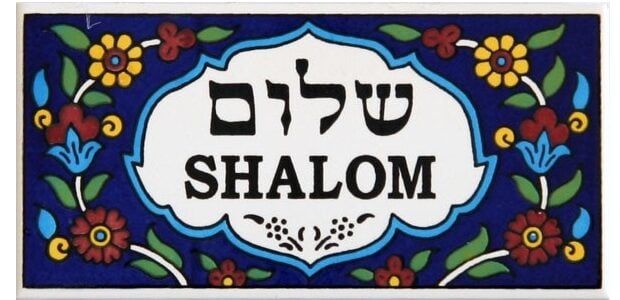
Shalom” in Hebrew means peace, and so much more. Explore the deeper Biblical and mystical meaning of this powerful word, and why it’s also commonly used as a greeting.

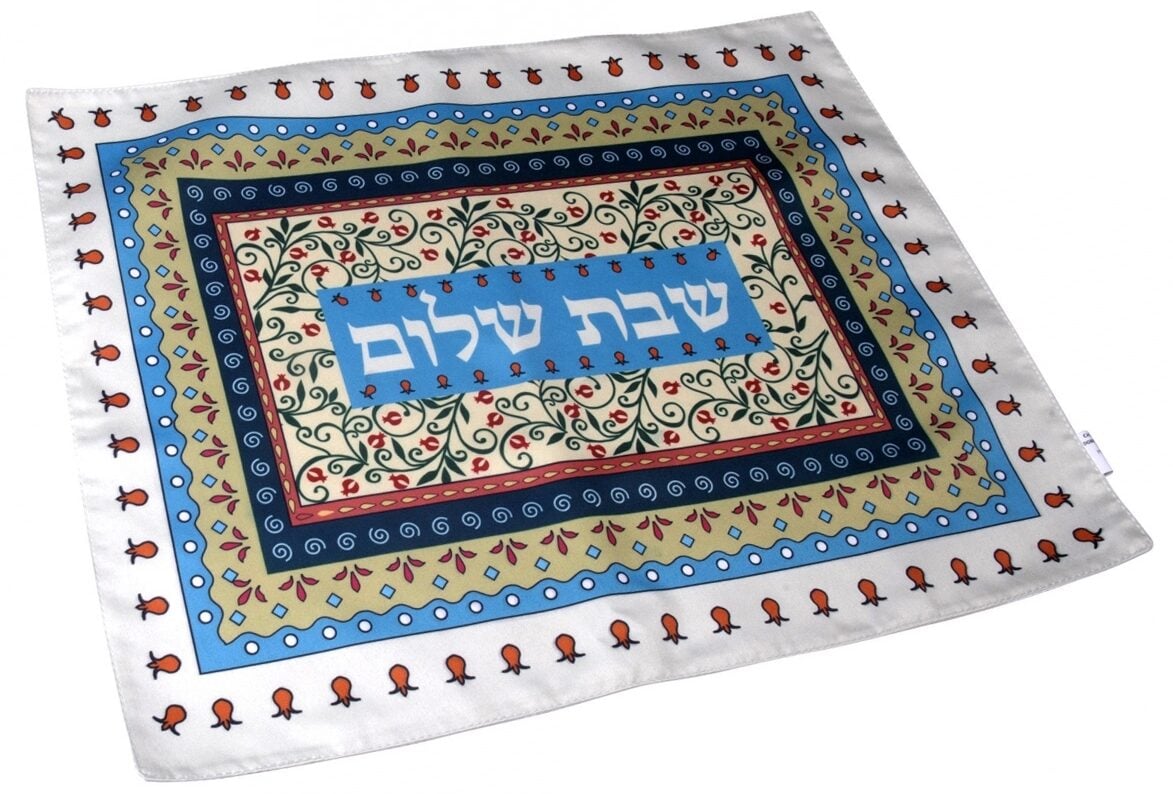
The word Shalom comes from the root letters Sh-L-M, as in Hebrew grammar, a trilateral root can take on all sorts of different meanings depending on the inserted vowels and so on. People in the English speaking world will likely be familiar with ‘Shalom’ as a greeting, and maybe even know that it can be used as a stand in for both ‘hello’ and ‘goodbye’. It can also be used to mean ‘peace’ or ‘harmony’, used in phrases like Shabbat Shalom, or Shalom Bayit (peace in the home) . 
Other greeting terms from around the world have this, and not too dissimilar to ‘aloha’, in its native context can have many more complex and religious connotations. In addition to a greeting and meaning ‘peace’, this root is also the word for ‘pay’ and ‘complete’. It is this last meaning that is perhaps the most telling. All of the meanings relate to having balance in the world. When you pay, you complete a debt, and peace means things are perfect and finished. It also means there won’t be cause for dispute, as the debt has been settled.
Dove in the air with wings wide open

This is why it is a greeting, insofar as it is wishing someone well. It is a name of God found in the Torah. The Torah includes all of those meanings above, including well-being (Genesis 43:27), peaceful relations (I Kings 5:12), but beyond its qualities, it is also explicitly a name of G-d, as in Judges 6:24:

So Gideon built an altar to GOD and called it God-is-shalom…

Indeed, while it is not the most commonly found, the practice of including God’s names in personal names, like Shmuel, or Zacharia, the name Avishalom does this as well.

In halacha, it is not permitted to use the name of Hashem in an unclean place like a bathroom, so seeing a friend in a public restroom it would still be a problem to say “shalom”. Luckily in Hebrew there are no shortage of other nice greetings like “ma koreh?” (how is it going?) or “boker tov” (good morning). 

btn
shl-12

Moreover, the Talmud describes Torah by saying “its ways are pleasant ways and all its paths are shalom (peace)”. Much like how ‘rest’ on Shabbat is hardly just lounging around to enjoy oneself, ‘shalom’ is a deeper quality to describe the nature of the world. In essence, being at one with the world brings one peace.

The depth of Shalom is that it is a recognition of the big picture (ie. the complete picture), the commandments and teachings, and being aware of one’s relationship with God, which is the truest, long-lasting form of peace. If the Torah and its ways are Shalom, and God is Shalom then at its core anything divine and intended for our betterment is going to follow suit. Hebrew has plenty of other similar words to 'peace' like raguah (relax), and manucha (rest, calm), but none have the same significance as shalom.

btn
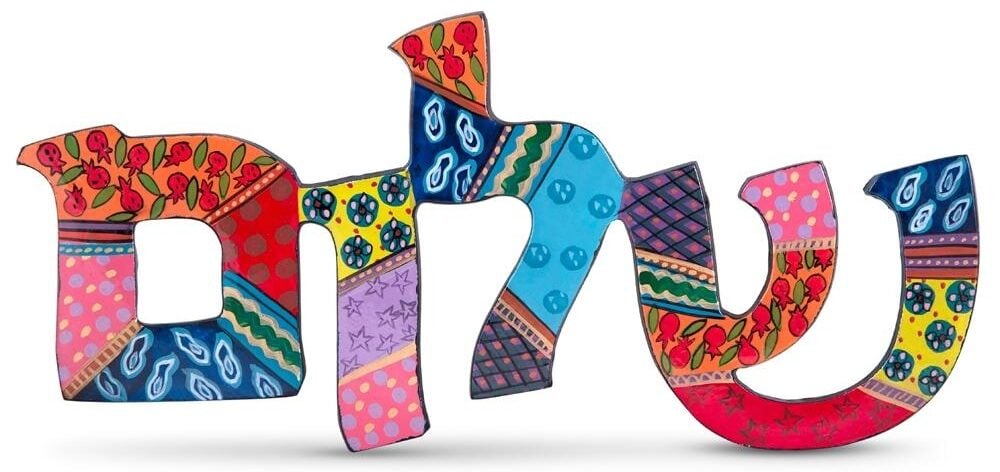
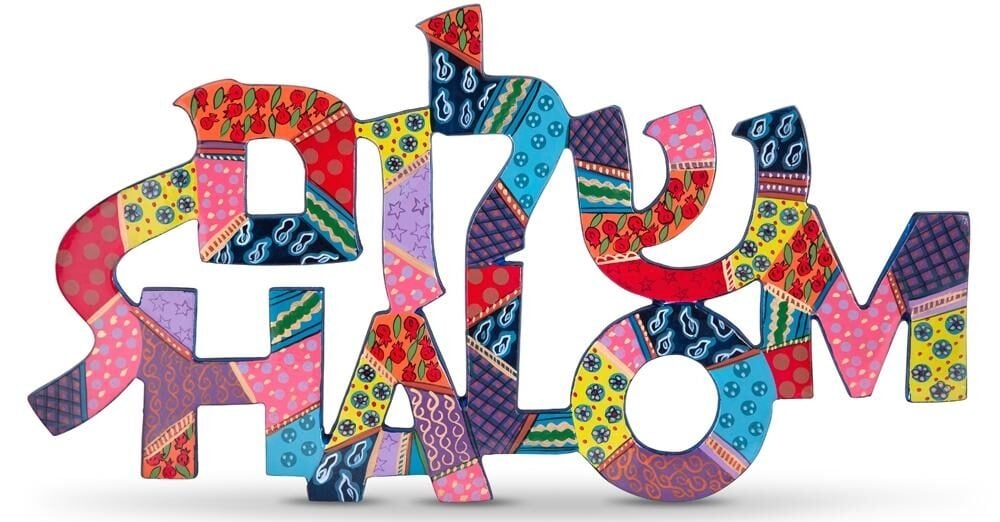
Yair-Emanuel-Hand-Painted-Shalom-Wall-Hanging---Hebrew-EL-WHD-1_large

It is also associated with the life and deeds of Aharon haCohen (Aaron the Priest). In the Mishne, the highest form of the Oral Law, he is regarded as a “rodef shalom” (pursuer of peace).

"… Hillel says: Be among the disciples of Aharon, loving peace and pursuer of peace, loving people and bringing them close to Torah. " Pirkei Avot. This is not merely that he enjoyed a little tranquil time—everyone prefers peace to chaos—but in his love for peace often translated into hard work, self-sacrifice, and principally treating peace as a goal, not simply as a coincidental absence of problems, but in their resolution. 'Shalom' represents the deepest level of peace.

Moses was the greatest of all time because of his connection to God, but Aharon, also strong in prophecy, was the greatest because of his ability to connect with the Jewish people.

Shalom is a Jewish value is there ever was one: ending discord in the world and finding peace. It is recognizing the beauty and wholeness of the world and God’s hand in it.

See our vast range of designed- and made-in-Israel "Shalom" gifts here!

btn

JWS POST YOU MAY LIKE

blue & white art (1)
Discover the Rich History of Blue & White Art in Jewish Culture
Walk into any Judaica store, browse Hanukkah decorations, or glance at an Israeli flag, and you’ll see them: blue and
Closeup of hebrew word in Torah page. English translation is name Benjamin. The youngest son of Jacob and Rachel. Progenitor of the Israelite Tribe of Benjamin. Selective focus.
Where Does Hebrew Come From? The Ancient Origins and Modern Revival
If you’ve ever marveled at the beautiful Hebrew letters on a mezuzah, struggled through your first Hebrew prayers, or watched
Illuminating Star of David Decoration and Menorah with Burning Candles Celebrate Hanukkah Traditions and Jewish Culture
The Maccabees and the Miracle: Discovering the Origins of Hanukkah
With Hanukkah less than a month away – starting this year at sundown on Sunday, December 14, 2025 – there’s
Hanukkah
Hanukkah Traditions Explained
Hanukkah will begin at sundown on Sunday, December 14, 2025, and last for 8 nights through Monday, December 22. It’s
a1a1bd56-d7a8-4990-810b-e81eb6b8237c
7-Branch vs 9-Branch Menorah: What's the Difference?
If you’ve ever wondered why some menorahs have seven branches while others have nine, you’re not alone – it’s one
pexels-rodnae-productions-6116037
Why Do We Give Gifts on Hanukkah?
Hanukkah has become known for gift-giving around the world, and it’s many Jews’ favorite holiday tradition today. With the Festival