What happens when centuries of diaspora converge in one country?
Across the globe, Jewish communities have followed different historical paths. Today, Ashkenazi Jews make up the majority of Jews in North America and Europe, where their influence shapes much of what many consider to be "mainstream" Jewish culture, especially in areas like synagogue organization, education, language, and media. Their institutions, liturgical style, and communal leadership models have become dominant in many parts of the Jewish world, particularly in the West.
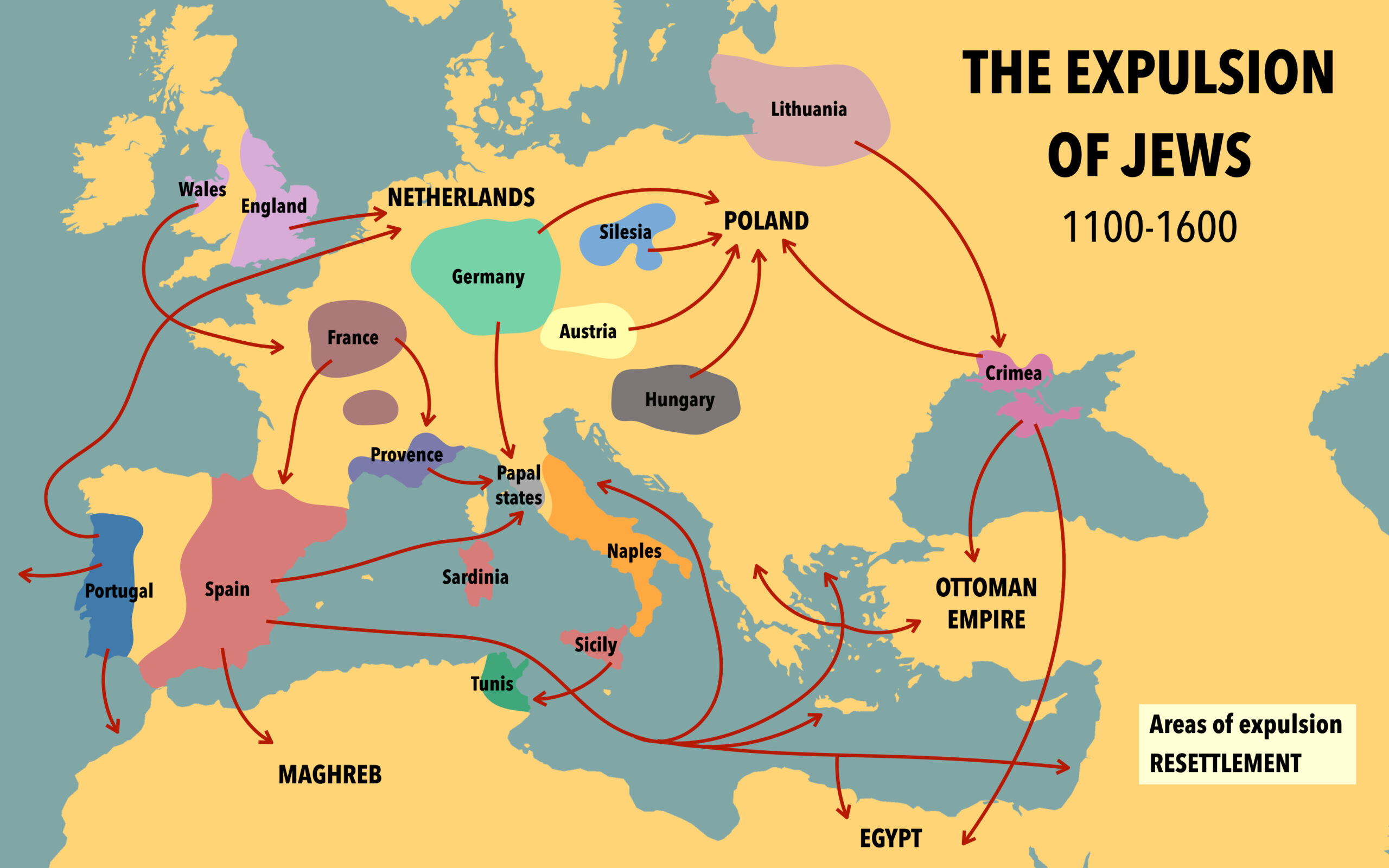
Sephardi and Mizrahi Jews, by contrast, were often centered in lands stretching from Spain and North Africa to the Middle East and Central Asia. Following the expulsion from Spain in 1492, Sephardi Jews spread throughout the Ottoman Empire, North Africa, the Balkans, and parts of Italy and the Levant. Mizrahi Jews, those whose roots remained continuously in the Middle East and surrounding regions, lived for centuries in places like Iraq, Yemen, Syria, Egypt, and Iran. These communities developed rich religious, linguistic, and cultural traditions deeply intertwined with their local environments.
However, the 20th century brought profound change. As Arab nationalism and regional conflicts intensified, Jews in Muslim-majority countries increasingly faced persecution, discrimination, and displacement. From the 1940s through the 1970s, large waves of Sephardi and Mizrahi Jews left or were expelled from their homelands, many arriving in Israel seeking refuge and a new beginning. Some also settled in France, Latin America, and parts of the U.S., but Israel quickly became the central home for these communities.

Since 1948, the State of Israel has welcomed Jews from all over the world. The establishment of the Jewish homeland brought together diverse Jewish communities into a single national project. Early on, Ashkenazi customs and leadership dominated Israeli public institutions, government, and culture, often marginalizing the traditions of Sephardi and Mizrahi immigrants. Many of these immigrants faced social and economic discrimination, were placed in transit camps and peripheral development towns, and had limited access to political power. Despite these challenges, they held fast to their heritage and slowly began to reshape the Israeli cultural landscape.
Over time, Israeli society has evolved into a vibrant mosaic that increasingly values the full spectrum of Jewish identity. Sephardi and Mizrahi communities have seen a revival in recent decades, particularly as second- and third-generation Israelis rise into positions of cultural, academic, and political leadership. Their traditions, once sidelined, are now a celebrated part of the national story. Mizrahi music plays on national radio, Sephardi cuisine is found in restaurants across the country, and Ashkenazi scholarship continues to shape educational life. Intermarriage between groups is common, blending customs and forming new hybrid traditions in everything from Shabbat meals to wedding ceremonies.
In synagogues, schools, arts, and government, voices from all Jewish backgrounds contribute to shaping a uniquely Israeli identity: one that acknowledges its complex past while embracing a more inclusive and multifaceted future. Despite the challenges that remain, the convergence of Ashkenazi, Sephardi, and Mizrahi life in Israel offers a powerful example of how a shared faith and destiny can unite vastly different cultural experiences into a common national narrative.